

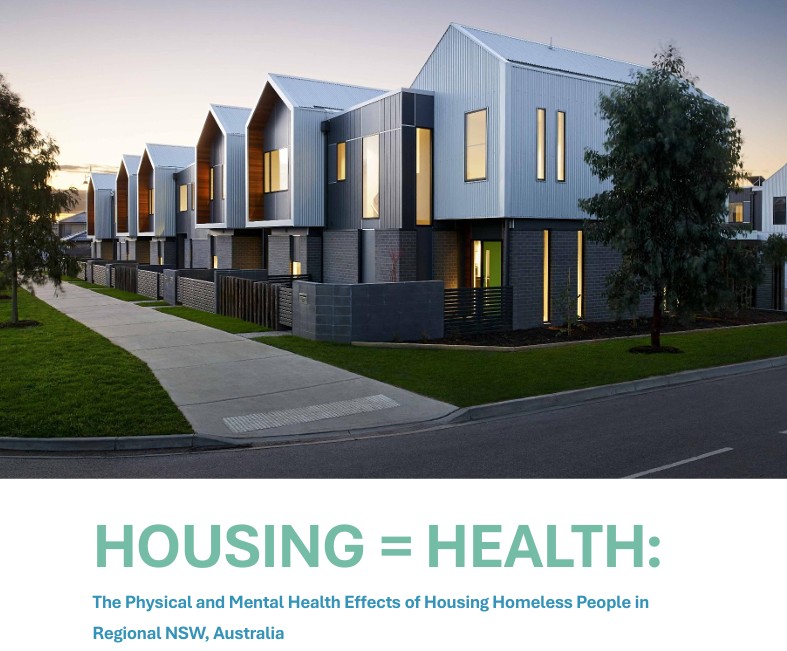
This research report presents key findings from a mixed-methods study investigating the physical and mental health effects of housing previously homeless individuals (PHI) in regional New South Wales (NSW), Australia.
Drawing on both quantitative and qualitative data collected across multiple regional sites, the study provides compelling evidence that stable housing leads to substantial improvements in physical health and significant reductions in anxiety and depression. These positive outcomes are particularly evident among survivors of domestic and family violence (DFV) who received targeted housing support.
The findings underscore a critical policy imperative: housing must be understood not merely as shelter or a market commodity, but as essential public infrastructure for care. Emerging research highlights housing’s central role in supporting health, wellbeing, and social inclusion, positioning it alongside other key infrastructure such as water, energy, and healthcare. In this light, social housing emerges as a cornerstone of national development, yielding benefits that extend beyond individuals to the broader public through improved health outcomes, economic stability, and stronger, more resilient communities.
Reconceptualising housing as infrastructure reframes it from a reactive social service to a proactive determinant of collective flourishing. This demands sustained commitment to public investment and responsible stewardship. The evidence presented in this study strengthens the case for systemic policy reform and affirms that housing is not just a foundation for life, it is a life sustaining system vital to health, dignity, and social equity