

Home Homelessness Page 2
Homelessness
- Research
This study examines how homelessness is represented on TikTok through a summative content analysis on the top 200 TikTok videos with the hashtag #homelessness on July 15, 2022.
- Research
Often, studies examining experiences of homelessness after incarceration use emergency homeless shelters as proxies for homelessness itself. This study employs a more inclusive definition.

- Research
This community case study examines the efficacy of the Women’s Housing and Support Program (WHSP), which provides case management to older women experiencing homelessness in Melbourne, Australia.
- Research
Using a sample of community mental health clinic clients, this study explores the prevalence of three social determinants of health: food insecurity, homelessness, and neighborhood disorder, and assesses their associations with five outcomes of health, including mental health and physical health.
- Research
The objective of this study is to examine the occurrence of housing loss after jail incarceration among individuals without prior evidence of homelessness and the associated risk of reincarceration.
- Research
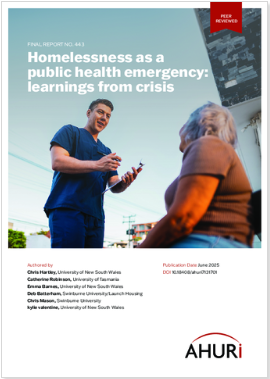
This research looks at public health responses to homelessness during the COVID emergency in Australia. It identifies barriers, adaptations and lessons learned from increased teamwork between public health and homelessness sectors. It investigates how these partnerships formed and how they can continue with ongoing adequate funding, staffing and logistical support.

- Research
The Report on Government Services (RoGS) provides information on the equity, effectiveness and efficiency of government services in Australia. The…
- Research
This paper examines the relationship between housing assistance and youth offending in New Zealand (NZ). Using the Integrated Data Infrastructure (IDI), we established three cohorts of youth aged 14–24 who were part of households that received the Emergency Housing Special Needs Grant (EHSNG), lived in public housing, or received the Accommodation Supplement (AS) between 2016 and 2022. We found that offending decreased significantly among young people living in public housing or receiving the AS compared with the general population. However, reductions were not significant among those receiving EHSNGs, highlighting the importance of stable housing assistance on reducing youth offending.