

Home Community Housing Provision Page 2
Community Housing Provision

- Research
An address to the Chifley Research Centre by The Hon. Dr Andrew Leigh MP, focusing in part on the housing affordability crisis.

- Research
The Report on Government Services (RoGS) provides information on the equity, effectiveness and efficiency of government services in Australia. The…
- Research
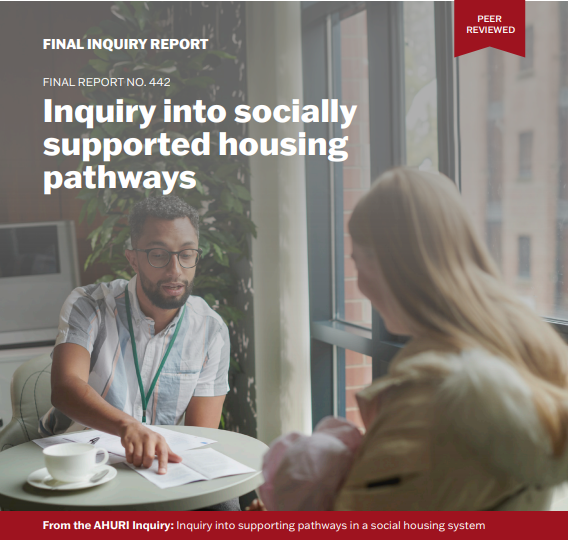
This research Inquiry looked at how to change Australia’s housing assistance system into one that supports ‘housing pathways’. A better system for socially supported housing pathways could focus on supporting each person and household’s needs and goals, rather than being constricted by access to a small number of social housing homes.
- Research
This research examines the nature, experience, and relevance of tenant engagement for tenants living at Brisbane Common Ground, which is a single site model of permanent supportive housing.

- Research
We study the effects of the SRU law introduced in France in December 2000 to support scattered development of public housing in cities and favor social mixity.
- Research
Sense of home is linked to physical and mental wellbeing; however, less is known about achieving it in collaborative housing contexts like housing cooperatives. This study extends the concept of sense of home by focusing on collaborative settings, contrasting with individual and market-driven housing.

- Research
Evidence-based design, common in healthcare, can improve Social Housing Projects quality by integrating evidence into design processes, but its use is limited. A literature review also identified tools to align design decisions with user needs.
- Research
This study critically examines the structural, policy, and market-related factors contributing to the crisis, with a particular focus on Community Housing Organizations to deliver housing solutions.