

Home First Nations peoples
First Nations peoples
- Research
Aboriginal and Torres Strait Islander peoples are deeply connected to the lands, seas and skies across the settler-colonial state of Australia. They take strength from ongoing connection to culture, spirituality and community.
- Research
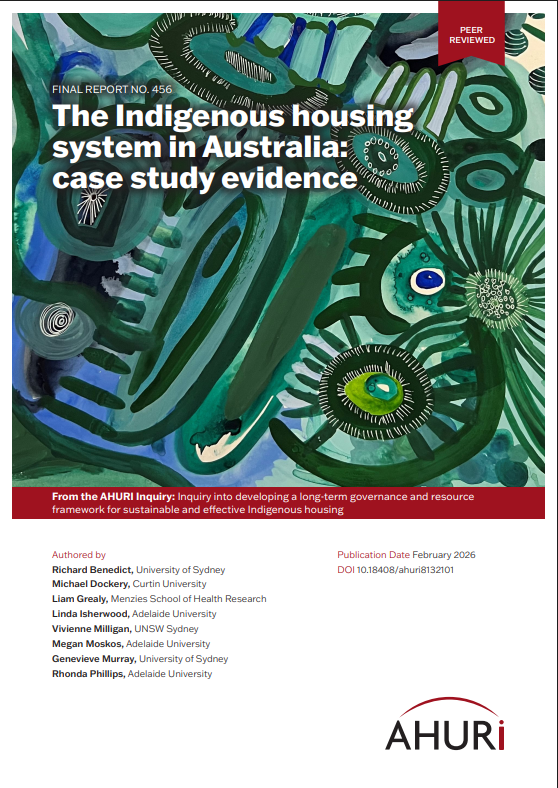
From the AHURI inquiry: Inquiry into developing a long-term governance and resource framework for sustainable and effective Indigenous housing. What…
- Research
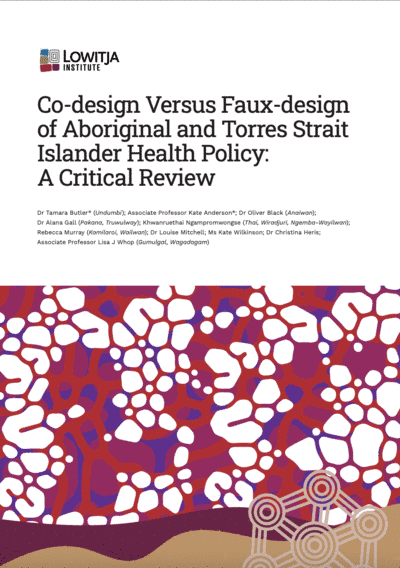
This paper critiques the proliferation of “faux-design”—superficial or tokenistic applications of co-design principles—and contrasts them with best-practice approaches that genuinely shift power and decision-making to Indigenous communities.

- Research
The Report on Government Services (RoGS) provides information on the equity, effectiveness and efficiency of government services in Australia. The…

- Research
The historical injustices of colonization, dispossession, and racism have created unique housing challenges influencing the health gap for Indigenous people in high-income countries. Understanding the breadth and nature of research in the area of housing and Indigenous health is key for establishing a research agenda that fills knowledge gaps and informs culturally appropriate housing initiatives.
- Research
A scoping review assessed which risk assessment tool would suit Queensland homelessness service providers with First Nations clients. Recommendations are made for a DFV risk assessment procedure suitable for homelessness services.
- Research
This research from Aotearoa/New Zealand shows the commitment of people struggling against the housing odds to make life better for themselves and their communities. The research demonstrates how much more could be achieved through stable and affordable housing and what is at the heart of a home.
- Research
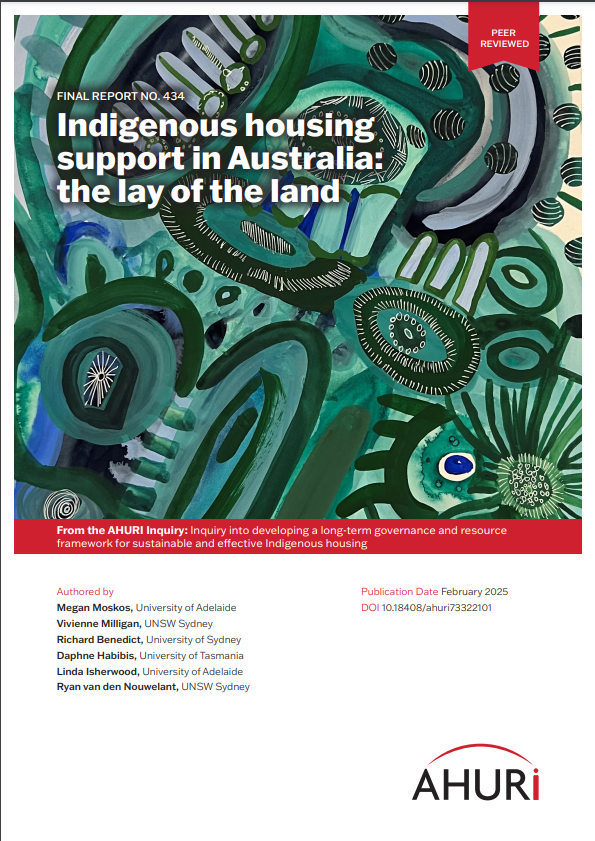
From the AHURI Inquiry: Inquiry into developing a long-term governance and resource framework for sustainable and effective Indigenous housing What this…