

Home Homelessness Page 3
Homelessness

- Research
While scholars have documented the punishment regime inflicted on unhoused people, less research has focused on the private citizens, often organized as mutual aid groups, who intervene to counteract—and help encampment residents survive—this regime.
- Research
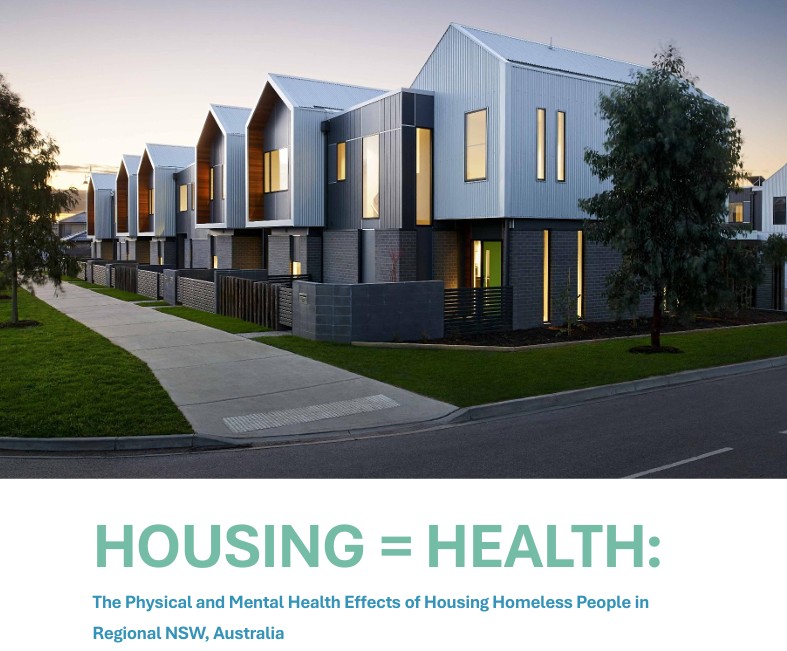
This research report presents key findings from a mixed-methods study investigating the physical and mental health effects of housing previously homeless individuals in regional New South Wales.

- Research
The objective of this study was to explore the feasibility and impact of a targeted exercise intervention with protein supplementation for women experiencing homelessness, addiction and mental health challenges.

- Research
This article examines the relationship between the Housing First model and contextual factors influencing its implementation. It identifies five key contextual factors shaping implementation and explores strategies developed to adapt the model in response.

- Research
Homelessness and mental illness reinforce each other through a cyclical relationship, and addressing this crisis requires integrated, housing‑centered interventions.
- Research
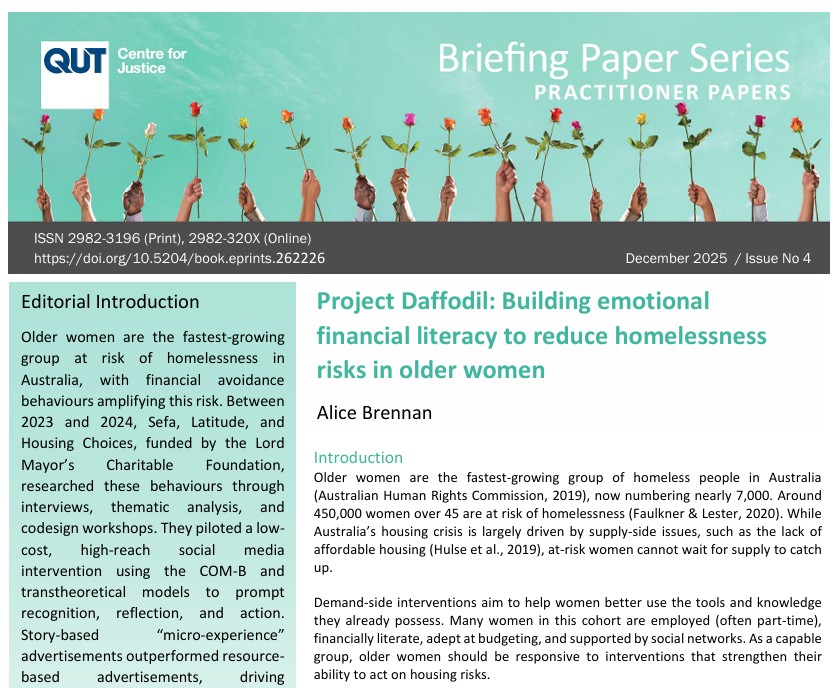
Older women are the fastest-growing group at risk of homelessness in Australia, with financial avoidance behaviours amplifying this risk. Between 2023 and 2024, Sefa, Latitude, and Housing Choices, researched these behaviours and piloted a low cost, high-reach social media intervention using the COM-B and transtheoretical models to prompt recognition, reflection, and action.
- Research
This study examines how homelessness is represented on TikTok through a summative content analysis on the top 200 TikTok videos with the hashtag #homelessness on July 15, 2022.

- Research
This study shows how cohortisation engenders a new problematisation of homelessness, replacing the neoliberal tendency to blame the individual with a focus on the failure of service systems to recognise and respond to cohort differences.