

Home Housing construction
Housing construction
- Research
Using a detailed integrated database for over 1,200 apartment buildings developed across Sydney between 2010 and 2019, the aim of this paper is to present an analysis of the actual level of profits generated during the post-GFC apartment boom.

- Research
This study develops a generalizable mathematical programming framework for optimizing housing form and location at the spatial resolution of individual development sites, showing adaptability of the framework by finding sustainable “gentle density” housing development plans in Toronto (Canada), Houston (USA), and Perth (Australia).
- Research
This study aims to investigate build to rent as a potential solution that can be integrated into Australia’s housing policy framework to deliver affordable, professionally managed rental supply.
- Research
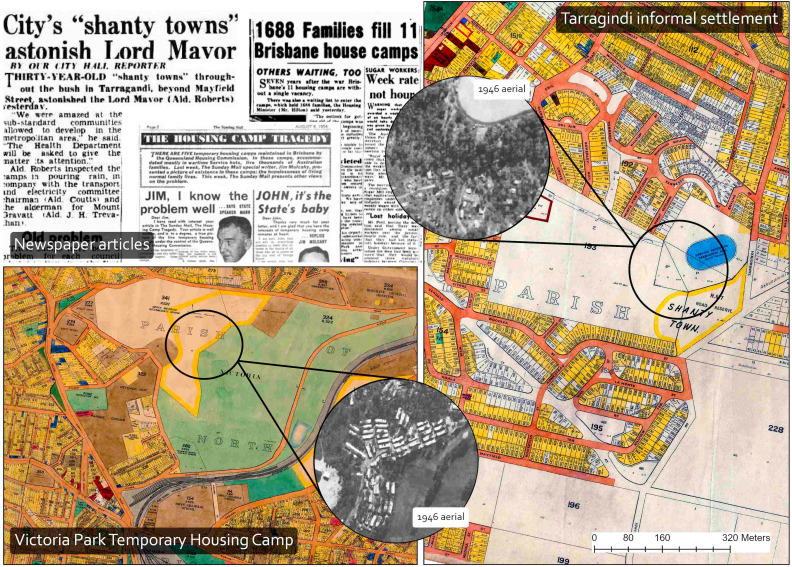
This study examines the spatial evolution of informal settlements, including temporary housing camps, in Brisbane, Australia. Findings reveal how these settlements were gradually absorbed into or reshaped by the surrounding urban fabric.
- Research
This paper investigates the application, design, and economic feasibility of prefabricated construction in Australian low-rise housing, with a focus on affordability and labour shortages.
- Research
This study investigates the impacts, challenges, and opportunities presented by recent global events on the Australian construction sector and its supply chains, and seeks to offer valuable guidance for policymakers, industry stakeholders, and researchers while navigating the current landscape.

- Research
The study aims to identify the best practices, challenges and opportunities for integrating sustainability and affordability in housing developments.
- Research
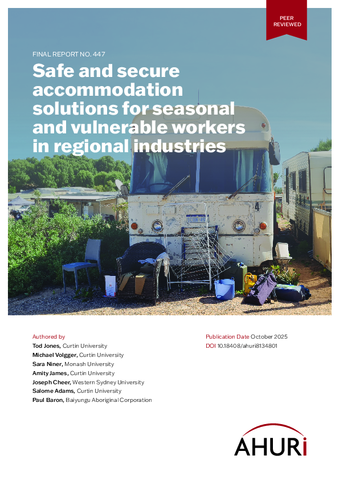
Regional Australia relies on a skilled and unskilled labour force, in part through migration schemes, to remain economically competitive. Regional workers are diverse and have diverse housing needs. This report develops an evidence-based policy framework for accommodating seasonal and vulnerable workers in regional areas to ensure a healthy, safe and productive workforce.