

Home Supportive Housing
Supportive Housing
- Research
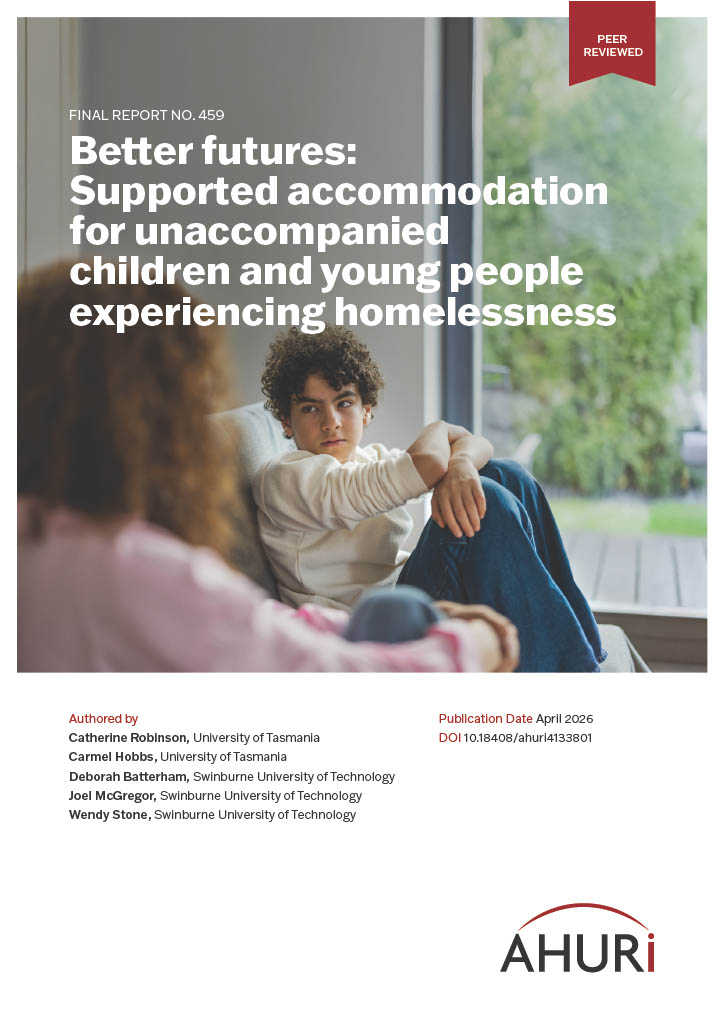
This research project examines the effectiveness of Australia’s supported accommodation services in meeting the needs of unaccompanied children and young people aged 12–24. It proposes principles to guide policy and practice toward a better system.
- Research
This article examines the relationship between the Housing First model and contextual factors influencing its implementation. It identifies five key contextual factors shaping implementation and explores strategies developed to adapt the model in response.

- Research
Our focus is on older adults experiencing or at risk of housing precarity who lack adequate housing assistance and sufficient wealth to secure housing. This study presents a new conceptualisation of this group, quantifies the scale of the issue, identifies those most affected, and analyses the distribution of wealth among older Australians.

- Research
This mixed-methods study explored how transition planning is implemented in Victoria, Australia, from the perspectives of young people, residential out-of-home care staff and cross-sector staff.
- Research
This study evaluates the impact of the Premier’s Youth Initiative (PYI) in NSW, an accommodation and support intervention, on homelessness outcomes for care leavers and explores its implementation.
- Research
This study introduces the concept of Collective Permanent Supportive Housing, tailored for older adults with histories of homelessness and long-term substance use.

- Research
This study aims to assess the costs and health outcomes of providing stable housing to people experiencing homelessness who have opioid use disorder.

- Research
The Report on Government Services (RoGS) provides information on the equity, effectiveness and efficiency of government services in Australia. The…