

Home Tenancy Sustainment Page 6
Tenancy Sustainment
- Research
Home in Place has made a submission to the Everybody’s Home People’s Commission. The People’s Commission into the Housing Crisis provides a platform for everyday people and organisations to share their stories of housing insecurity. The testimony will culminate in a series of recommendations to fix Australia’s housing crisis. Home in Place’s submission provides insights into the housing crisis, its flow-on effects, and the steps that governments can take to solve the crisis.
- Research
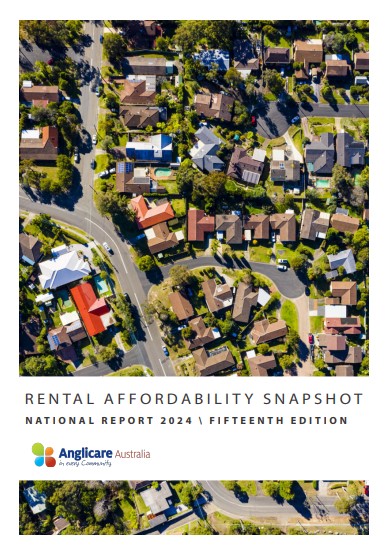
Our analysis shows that across the entire country, only three rentals were affordable for a single person receiving the JobSeeker payment. Nothing was affordable for someone receiving the Youth Allowance.
- Research
This multi-method study examines the emerging social media practices of housing organisations in New South Wales (NSW), Australia.
- Research
This paper compares shifts in tenure (restructuring of rental sectors), housing conditions (affordability and precarity), and alternative housing situations (parental co-residence), between income groups in two contexts: Australia and the Netherlands.
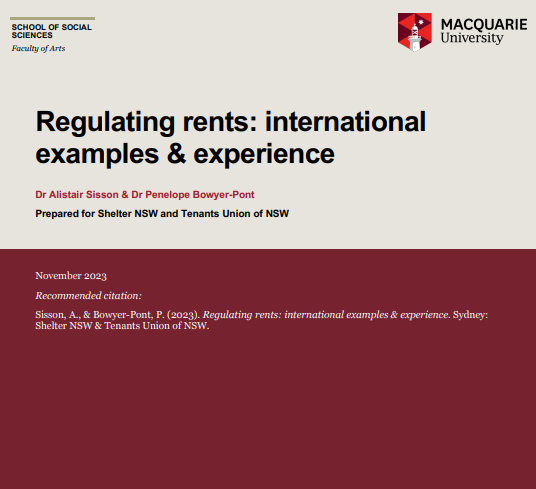
- Research
The purpose of this report is to summarise the range of rent regulations internationally and to present considerations for how rent regulation might be implemented in NSW.

- Research
Centering the wisdom and lived experiences of residents and staff—and informed by liberatory and loving philosophies like harm reduction, disability justice, and abolition—we offer four spatial design values: belonging, care, hope, and growth.

- Research
This article canvasses urban interventions that can support human health investment and development. This article also suggests that designers of community policies, programs, structures, and spaces should be accountable for promoting social connection to help generate measurable health outcomes, such as longevity.
- Research
This paper examines the links between place attachment and older persons’ preferences to age in place, and factors that disrupt these preferences. We use data from the 2001–2021 Household, Income and Labour Dynamics in Australia Survey and panel-data modelling to confirm strong associations between several place attachment dimensions and aging-in-place preferences.