

Home Young People
Young People

- Research
This mixed-methods study explored how transition planning is implemented in Victoria, Australia, from the perspectives of young people, residential out-of-home care staff and cross-sector staff.

- Research
This study examines housing options for international students in Australia, comparing purpose-built student accommodation, co-living spaces, build-to-rent developments, and private rentals based on affordability, accessibility, and student well-being.
- Research
This paper examines the relationship between housing assistance and youth offending in New Zealand (NZ). Using the Integrated Data Infrastructure (IDI), we established three cohorts of youth aged 14–24 who were part of households that received the Emergency Housing Special Needs Grant (EHSNG), lived in public housing, or received the Accommodation Supplement (AS) between 2016 and 2022. We found that offending decreased significantly among young people living in public housing or receiving the AS compared with the general population. However, reductions were not significant among those receiving EHSNGs, highlighting the importance of stable housing assistance on reducing youth offending.
- Research
Using baseline data from a study with suicidal youth experiencing homelessness, correlation and mediation analyses were completed to determine the associations between cognitive distortions, problem-solving, depressive symptoms, and suicidal ideation.
- Research
this study examined the association between individual and cumulative ACEs and parent-reported child homelessness in the US. Data for this study were derived from the 2022 National Survey of Children’s Health.
- Research
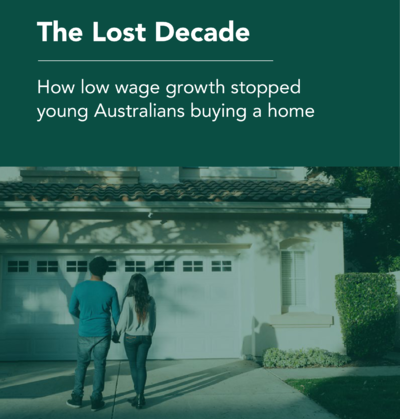
This report examines the impact of stagnating wage growth on the ability of young Australians to achieve home ownership between 2012 and 2022, a period the authors term “The Lost Decade.”

- Research
The purpose of this study was to understand youth transitioning from foster care, focusing on housing instability while transitioning to independent living. The study explored how early adversities in foster care led to compounded challenges, particularly during the transition to adulthood.
- Research
Recently, Housing First for Youth emerged as a targeted response to youth homelessness and is presently cited as the ideal model; however, researchers have yet to synthesize the evidence on which this claim is made.